

Haute Joaillerie
A rarely wonderful way to showcase a selection of its creations in all their richness was chosen by the Parisian haute joaillerie maison Van Cleef and Arpels through its collaboration with the Vienna Museum of Applied Arts, the MAK. In the joint exhibition ‘Glanzstücke ‘- best translated as ‘masterpieces’ – the two houses engage in a dialog of craftmanship, design, precision and imagination.
Van Cleef & Arpels Collection
Founded by the married couple Alfred Van Cleef and Estelle Arpels in 1906 on the Place Vêndome, the historic jewelry house became a truly pioneering institution in the world of jewelry and haute joaillerie thanks to its visionary ideas and their breathtaking realizations.
For ‘Glanzstücke’, Van Cleef & Arpels selected 300 pieces from the Patrimonial Collection which includes more than 3.000 haute joaillerie creations as well as watches and other precious items. The nephew of the founding couple, Jacques Arpels, established this collection in the 1970s by repurchasing historical pieces, and it documents in depth the house’s development and 120-year history.
MAK Collection
The art of jewelry is contrasted with the applied arts as represented by around 200 iconic masterpieces from the MAK Collection, the museum’s own extensive collection. The museum traces its origins to 1863 and became the world’s second-oldest one in its category.
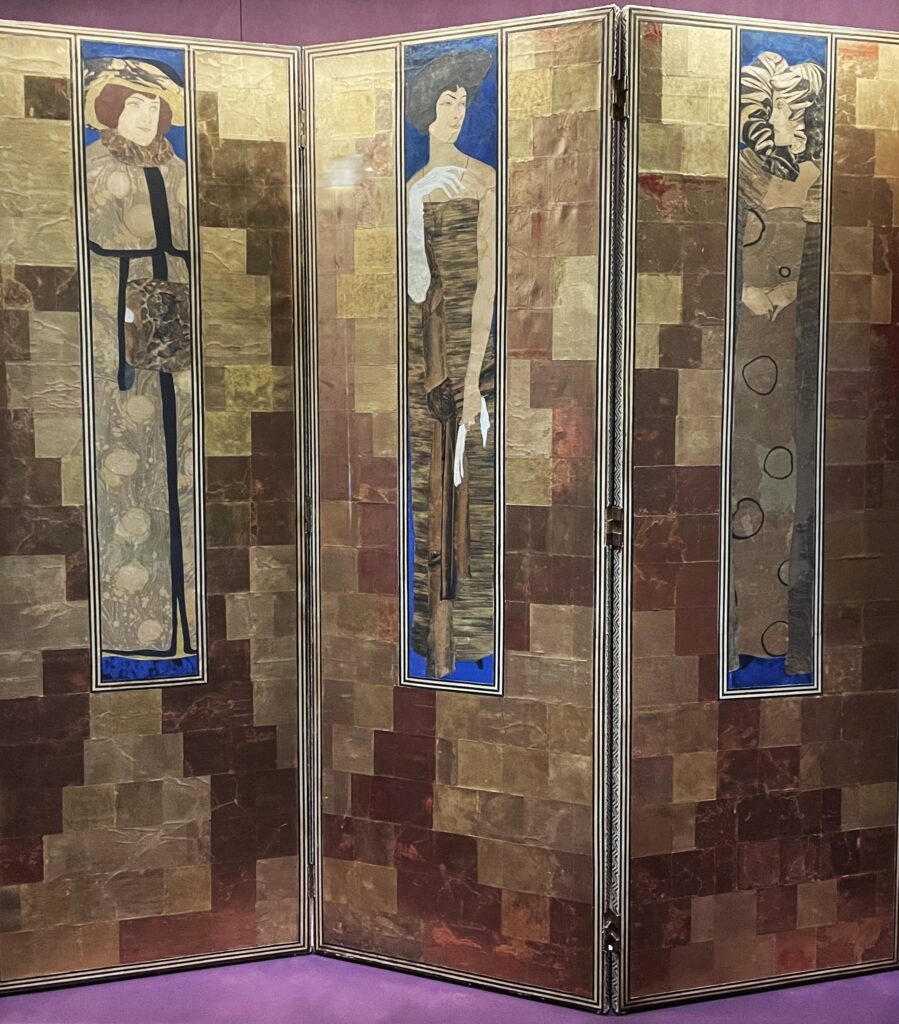
From historical textiles to the designs of the Wiener Werkstätte, a pioneering collective of fine artists, besides works of Gustav Klimt, Koloman Moser and Josef Hoffmann, the precious jewelry objects are accompanied in form, color and motifs.
The exhibition spans from the 16th century to the present day and demonstrates the masterfulness and beauty of the art forms.
Thematic worlds – travels
The presentation ‘Glanzstücke’ is divided into six chapters – or rather thematic worlds – that reveal, in a wonderful as well as surprising way, the connections between the art of jewelry and design and fine art.
From the very beginning, the theme of travelling has played a major role for both houses and begins the tour with beautiful objects inspired by distant lands and cultures.
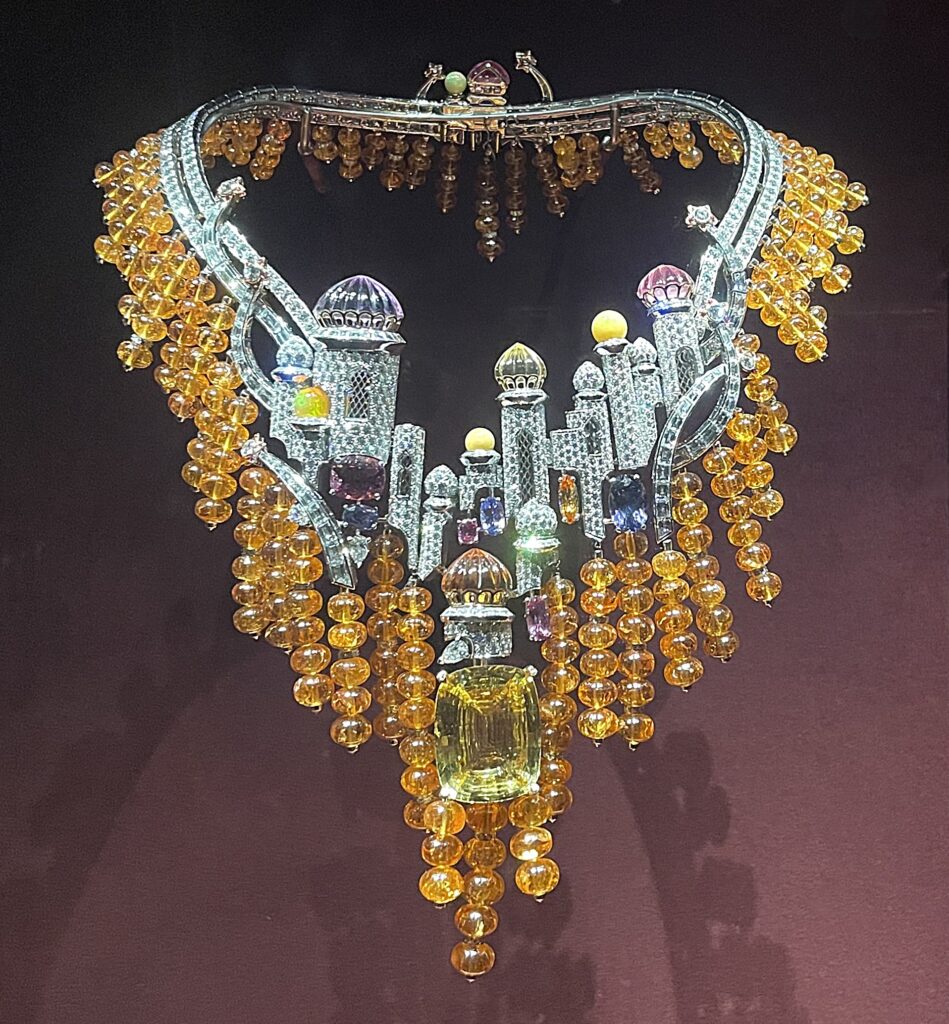
In the maison’s history, the impressions of numerous travels of the brothers Claude, Jacques and Pierre Arples were translated into precious jewelry creations. And is here dazzled with the beauty of a necklace that captivates with the vibrant colors of the most precious gemstones.
The six-panel folding screen ‘Winter’ from Japan from the 18th century, executed on paper with ink and mineral pigments, from the MAK collection means a wonderful start to this journey.
In the maison’s history, the impressions of numerous travels of the brothers Claude, Jacques and Pierre Arples were translated into precious jewelry creations. And is here dazzled with the beauty of a necklace that captivates with the vibrant colors of the most precious gemstones.
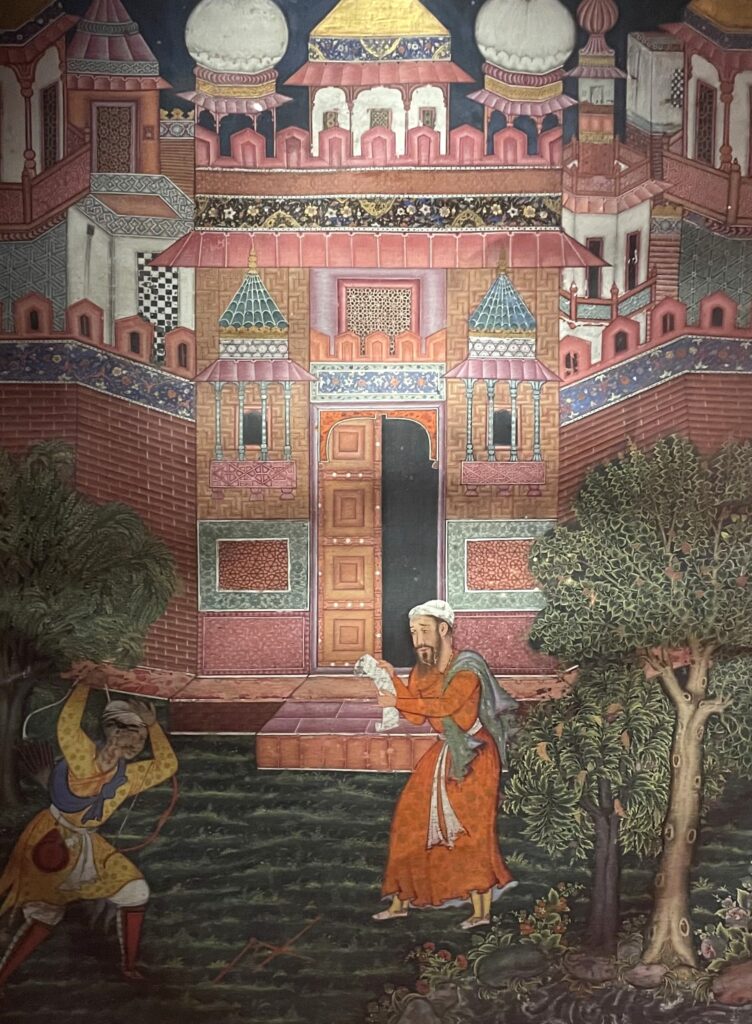
A painted miniature from the Mughal manuscript ‘Hamzanama’, around 1570, executed on cotton and paper, transports to the mhytical Orient – a celebration of color and domed structures.
The house Van Cleef & Arpels wonderfully responds with the vibrant collier ‘Izmir’ from 2011 from the high jewelry collection ‘Bals de Légende’. With its opulent architecture of white, yellow and rose gold, a yellow sapphire of 50.5 carats, amethyst, citrines, colored spinels, spessartite garnets, pink tourmalines, opals and diamonds it evokes the palaces of the Near East in an incredible way.
Thematic worlds – architecture
Architectural construction shapes the second chapter. Numerous sophisticated objects of the house Van Cleef & Arpels are characterized by a clear, geometric design language.
Simply incredible: the ‘Couscous’ wristwatch from 1949. Characteristic of this era were voluminous forms, elaborately crafted yellow gold and contrasting colored gemstones. Closely strung, three-dimensional gold beads resemble here grains of couscous which became an independent design element of the maison. Radially arranged, relief-like gold ribs frame the dial. Round-facetted rubies complete the look!
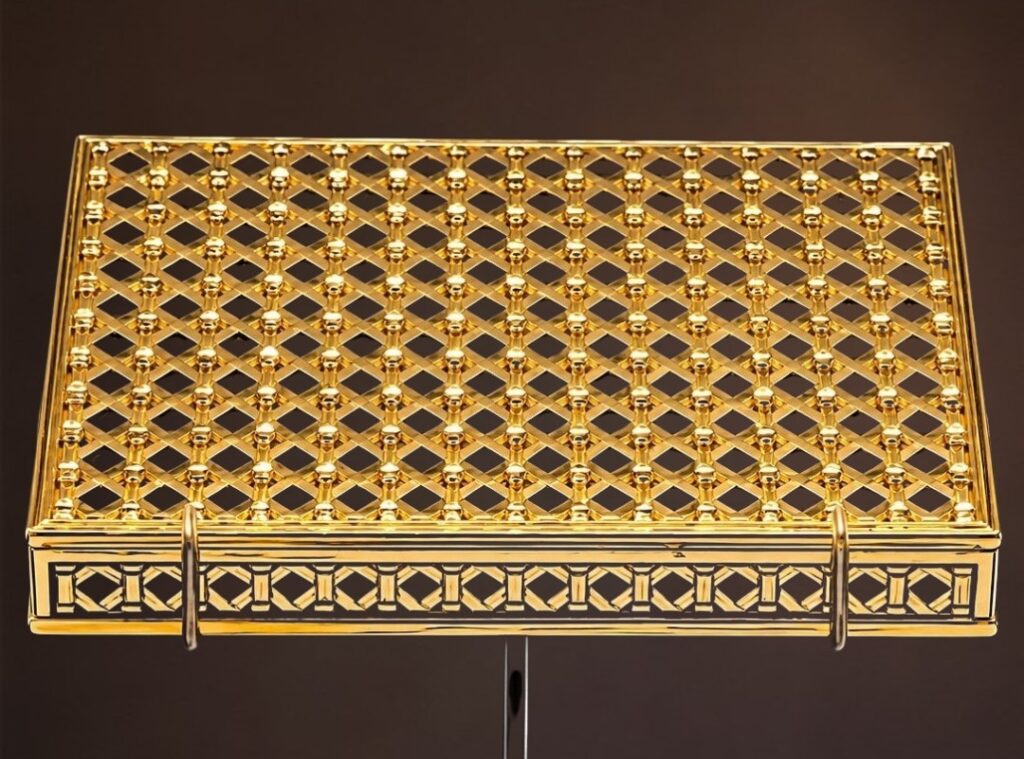
One such example is a casket with geometric ‘treillage’ (latticework) decoration. Its distinctive feature is the interplay of horizontal, vertical and diagonal elements.
Simply incredible: the ‘Couscous’ wristwatch from 1949. Characteristic of this era were voluminous forms, elaborately crafted yellow gold and contrasting colored gemstones. Closely strung, three-dimensional gold beads resemble here grains of couscous which became an independent design element of the maison. Radially arranged, relief-like gold ribs frame the dial. Round-facetted rubies complete the look!
Thematic worlds – rhythm
Dynamism through optical illusion, form and material, as well as through recurring motifs – on this concentrates the next thematic chapter.
Among the exhibited pieces of jewelry is the clip ‘Fleur Silhouette’, created in 1937 and made of yellow gold, white gold, rubies and diamonds. It shows the formal stylization of late Art Déco and reinterprets the floral motif in line with modernist principles.
Contrasted with this as here: geometric designs of the Wiener Werkstätte which is considered a precursor to Art Déco, including the fabric ‘Sirocco’ from the year 1929, painted with pencil, ink and gouache.
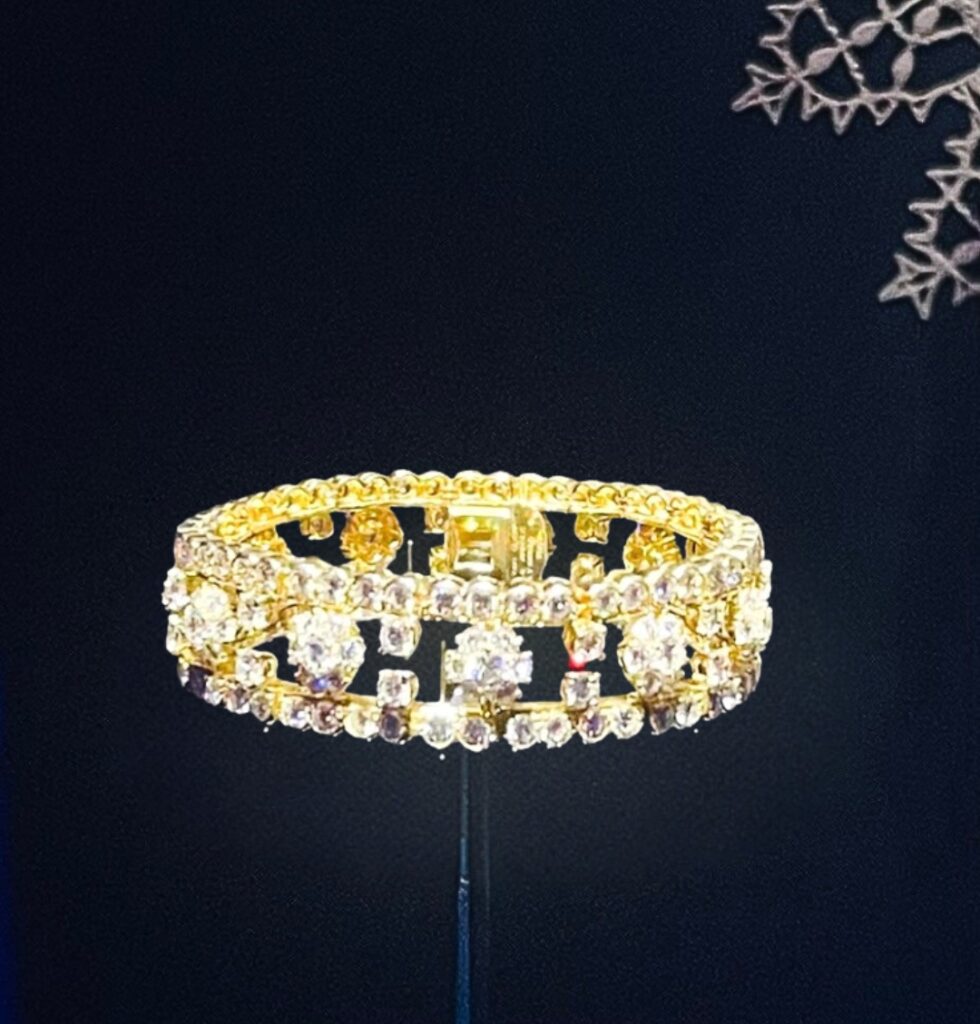
These find their counterparts in the diamond-studded bracelets presented in that very same era. They reflect the maison’s preference for white jewelry in that time and are characterized by their flexible structure, their exceptional style and repeating patterns.
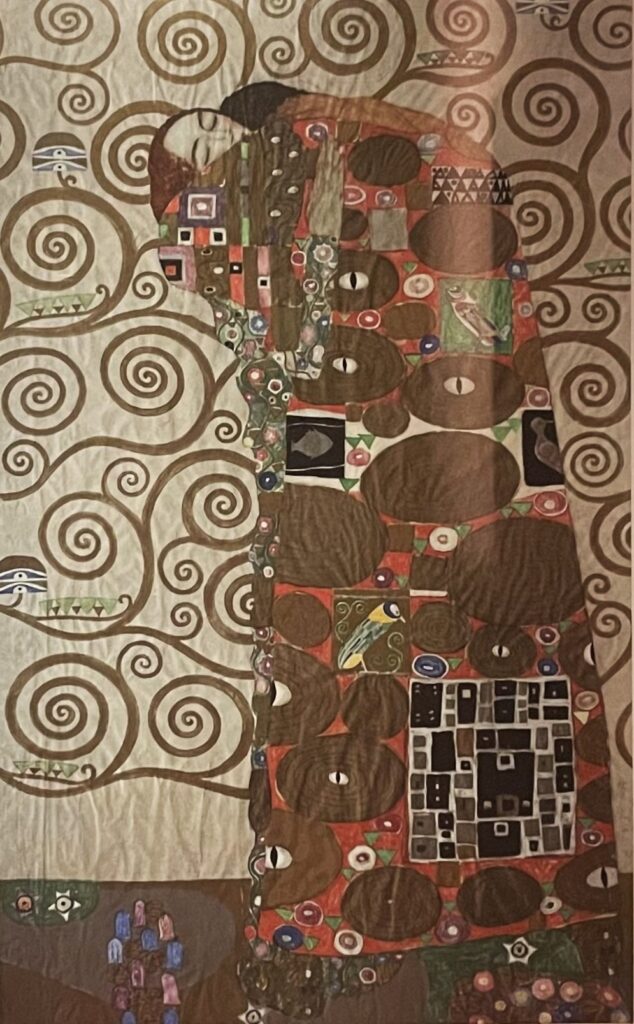
Gustav Klimt’s endeavor to unite art, architecture and ornament into a single, cohesive work, is impressively illustrated by his preparatory drawings for the frieze in the dining room of Palais Stoclet, with the theme of fulfillment -‘The Lovers’, created between 1908 and 1911, with pencil, pastel, gouache, bronze, silver, and gold powder.
These find their counterparts in Van Cleef and Arpels’ diamond-studded bracelets presented in that very same era. They reflect the maison’s preference for white jewelry in that time and are characterized by their flexible structure, their exceptional style and repeating patterns.
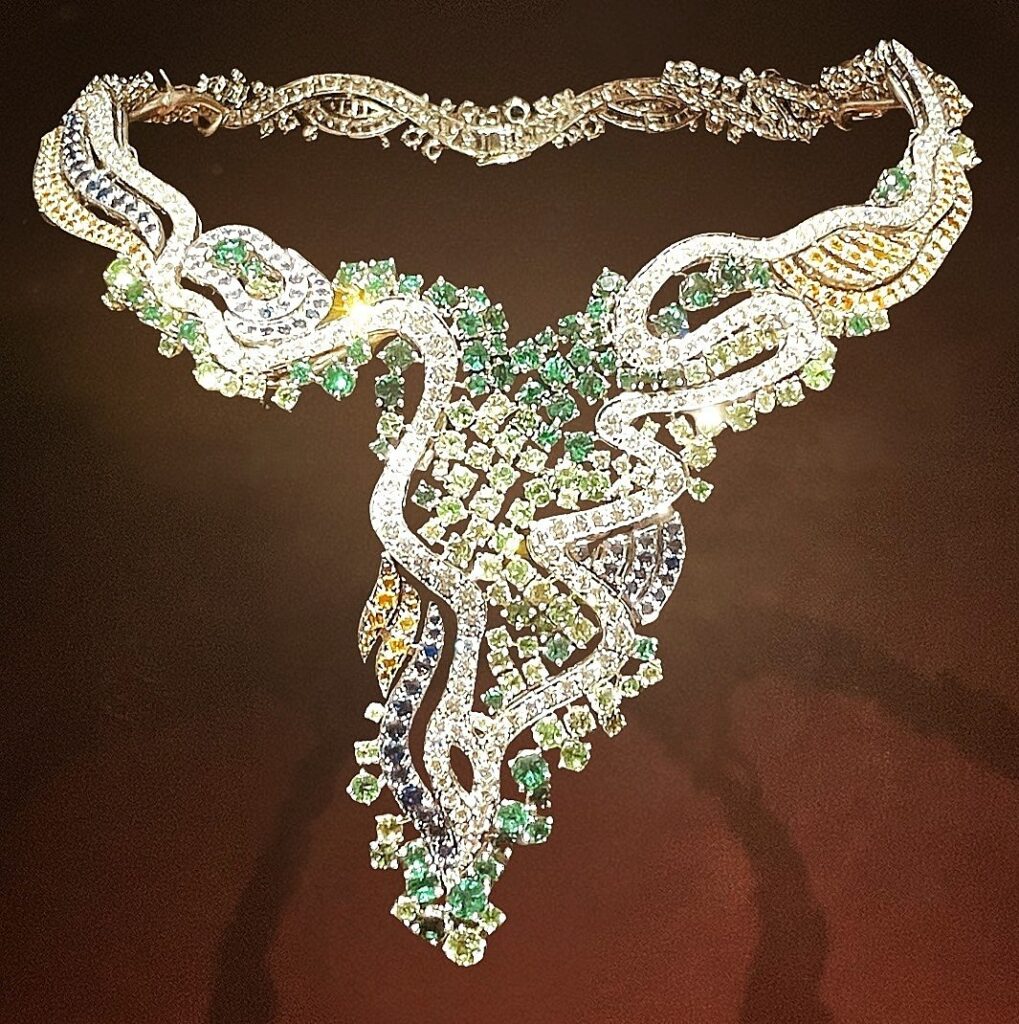
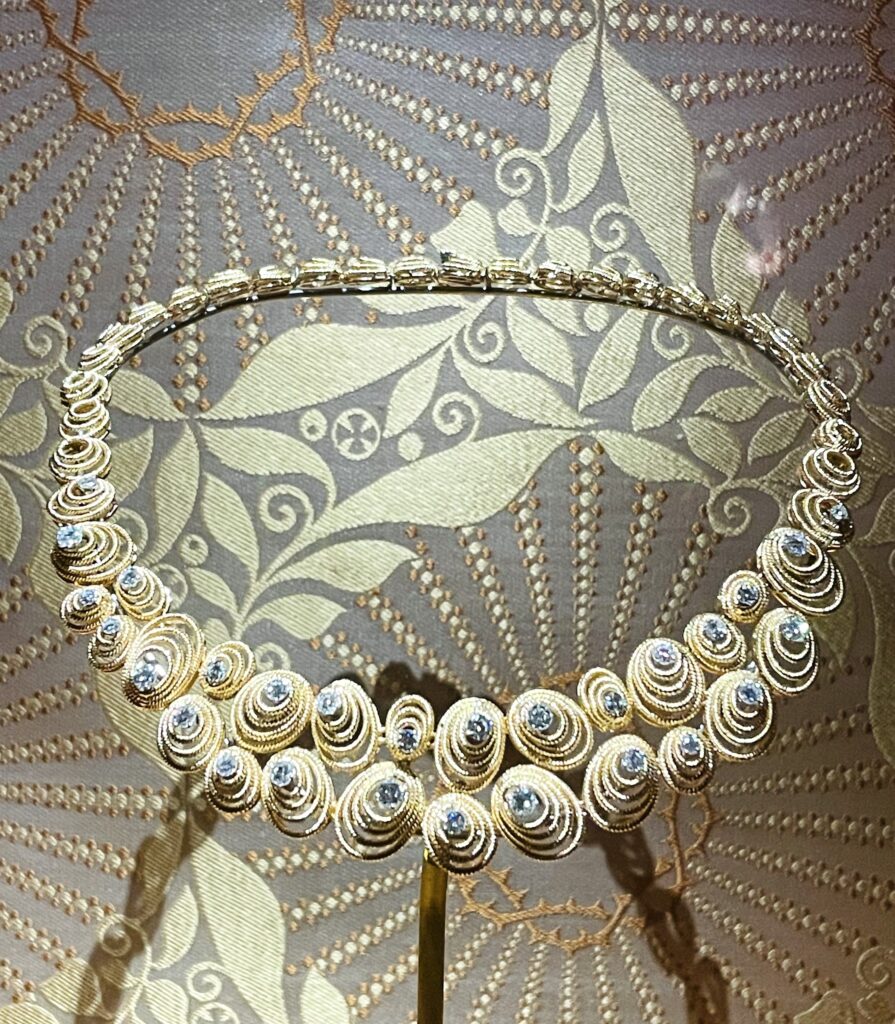
Pure movement and rhythm perfectly represents another exquisitely crafted necklace of the historic jewelry house. And captivates you! Finally twisted, cord-like gold structures (‘or torsadé’) lend the collier a textile-like quality.
So the framework for this jewelry piece is provided by another piece from a collection of designs that were conceived by artists for the textile and fashion department of the Wiener Werkstätte, and convinces with large patterns and aesthetic colors.
Thematic worlds – on stage
Vienna takes center stage in the exhibition’s fourth world engaging with the performing arts. Because In the 19th century, not least due to the Congress of Vienna in 1815, the Austrian capital developed into a significant center for ball culture.
And since its founding, Van Cleef & Arpels has designed jewelry and even accessoires for opera and theater lovers and artists, taking into account the associated etiquette and, in particular – elegance.
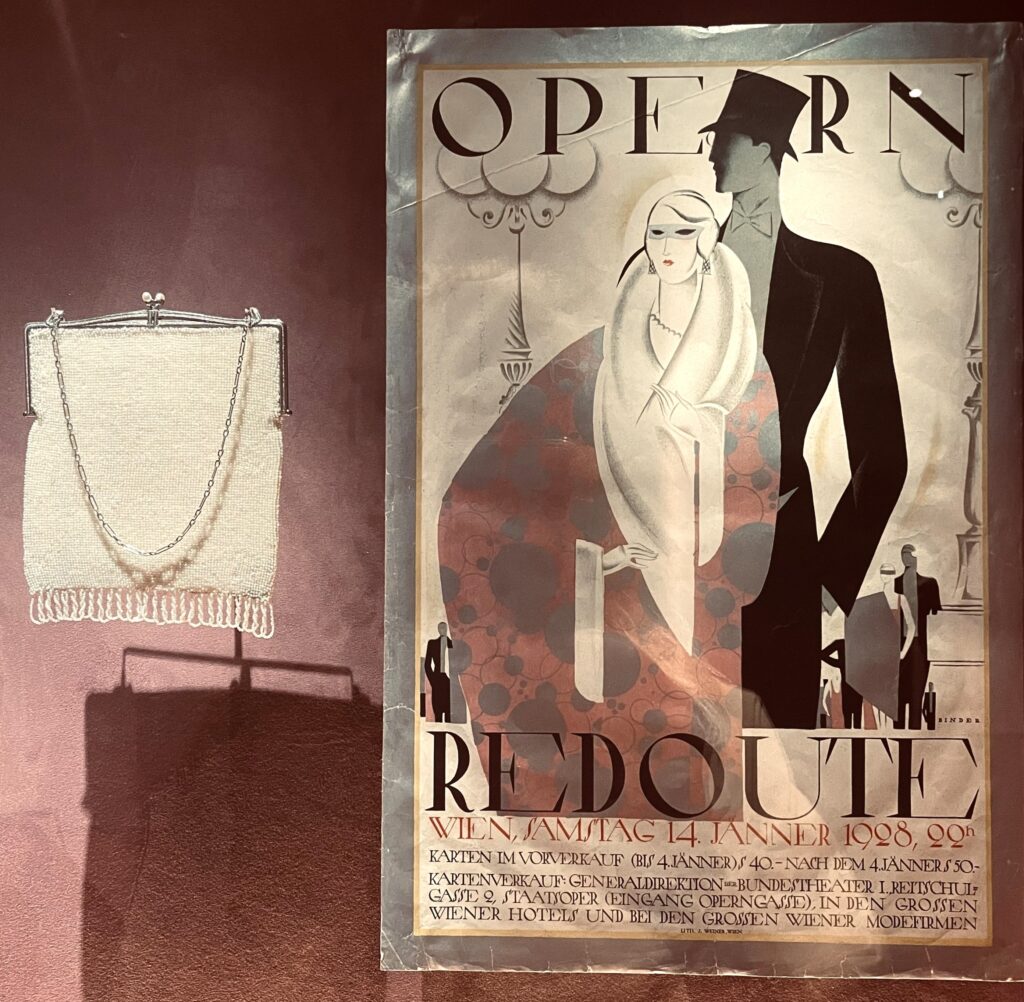
A great example of this is an evening bag from the year 1923. It was designed from platinum, pearls and diamonds and impresses with sophistication.
Furthermore, opera and ballet enter here in a dialogue with Van Cleef & Arpels’ close connection to the world of dance. This finds expression in dancers and fairies that incredibly embody the enchanting world of the maison. Particularly: the gracile ‘Fairy Clip’ from the year 1945, made of yellow gold, palladium and diamonds. Simply dreamlike.
Thematic worlds – nature
Nature is a design constant that runs like a common thread through the maison’s impressive collections. In an hommage to flora and fauna, floral ornaments stand alongside botanical studies, printed textiles and sculptures.
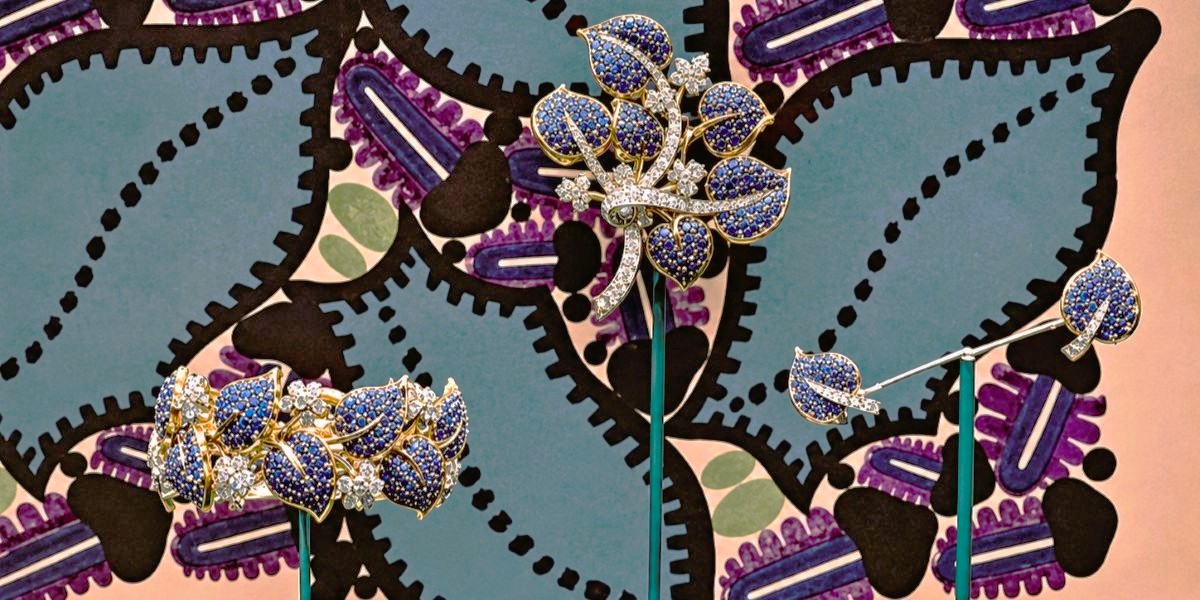
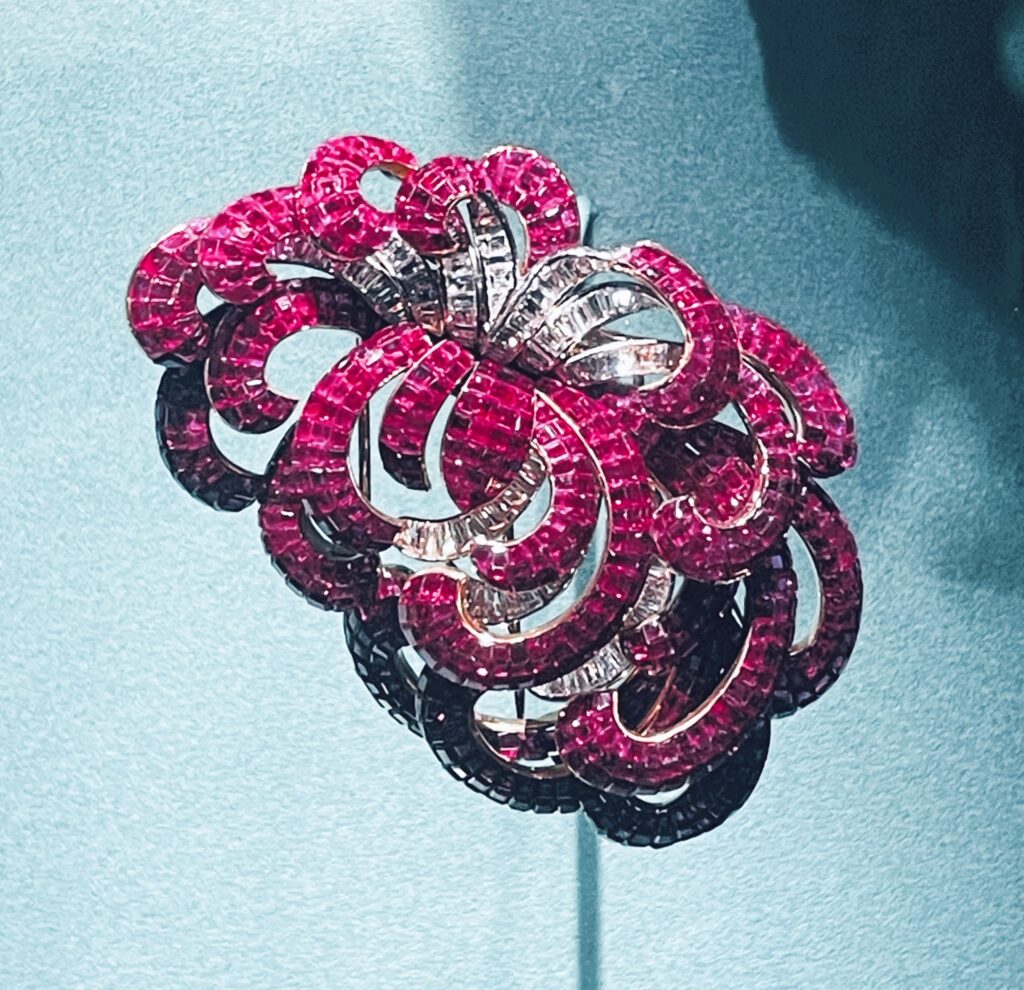
Particularly impressive in this context: Van Cleef and Arpels’ flower brooch ‘Chrysanthemum’, designed from platinum, yellow gold, diamonds – and rubies set with the the so-called ‘mystery setting technique’, a technical innovation where gemstones are set in a way that the gold structure remains invisible and which the maison had patented as early as the 1930s.
The context of this is a lithograph, reminiscent of a study. It was created around 1860, true to detail, and is called ‘Nouvelle suite de fleurs dédiée aux arts et à l’industrie’ (‘New set of flowers dedicated to the arts and industry’).
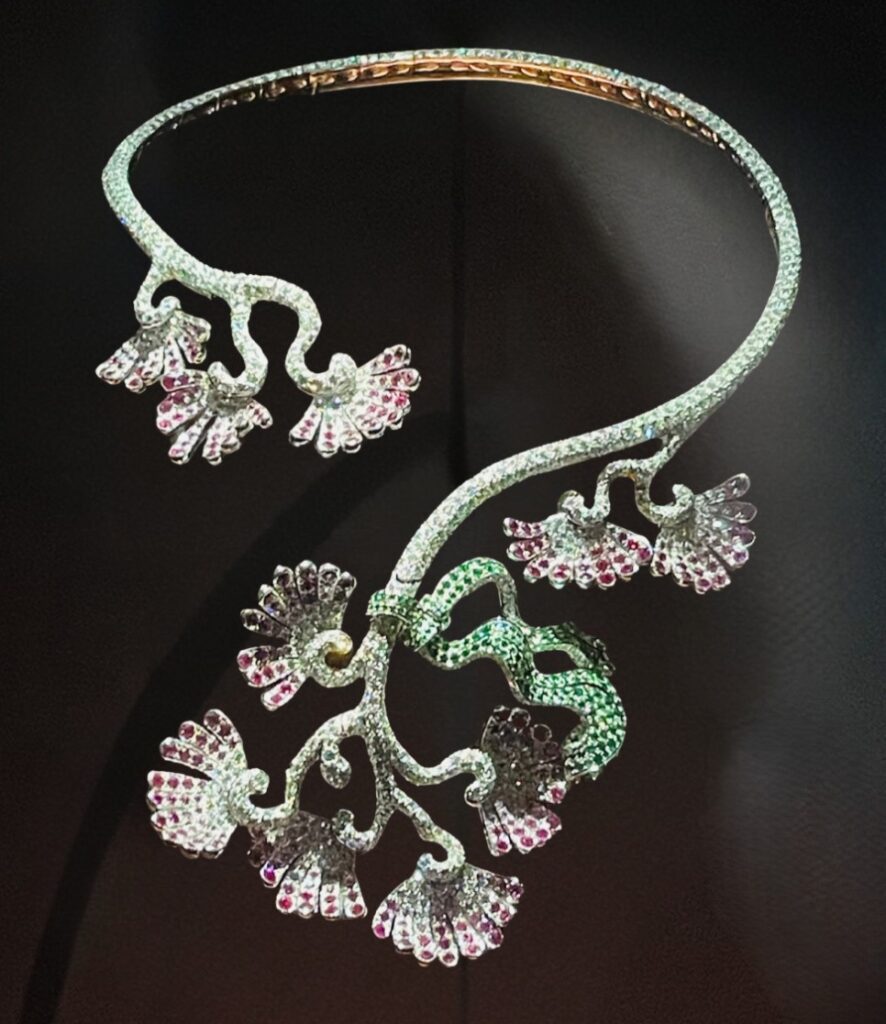
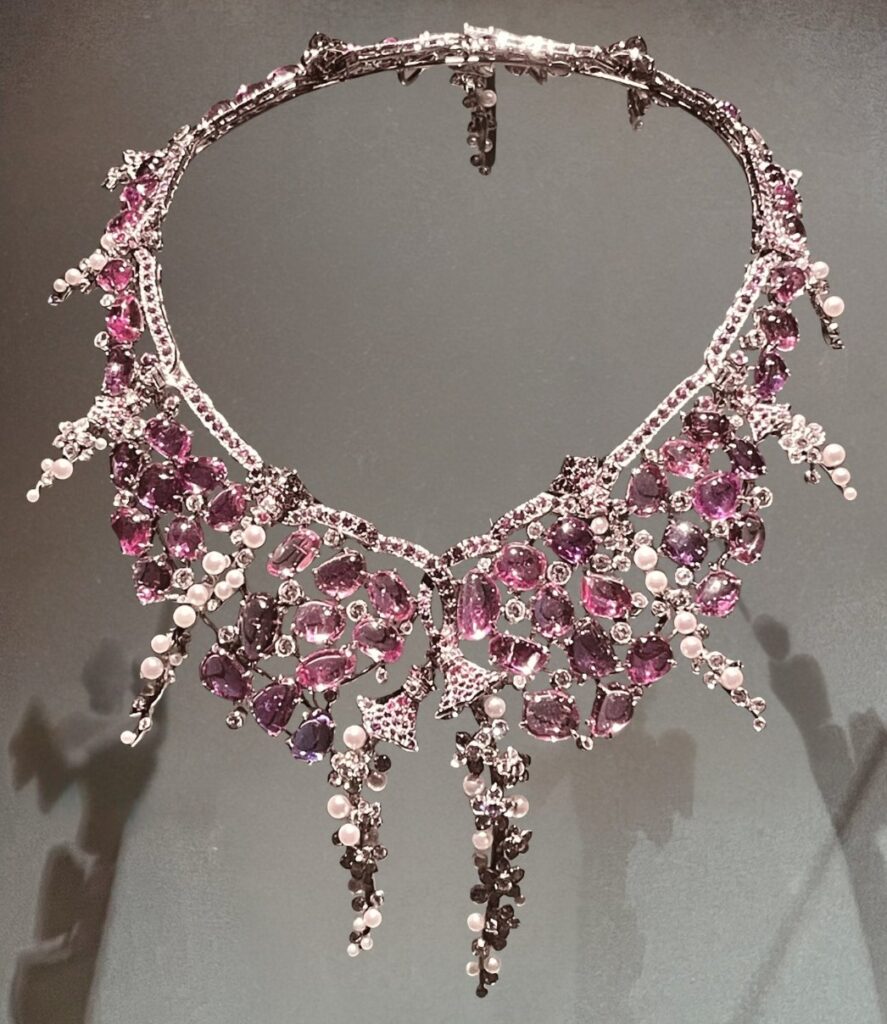
The diverse designs of the jewelry house range as far as breathtaking necklaces like ‘Victoria’ from white gold from the collection ‘Les Jardins’. Organically arranged gemstones – sapphires – reminiscent of lush blossoms, with nuanced color gradients ranging from pink through magenta to violet; hanging, bead-adorned elements symbolize leaves.
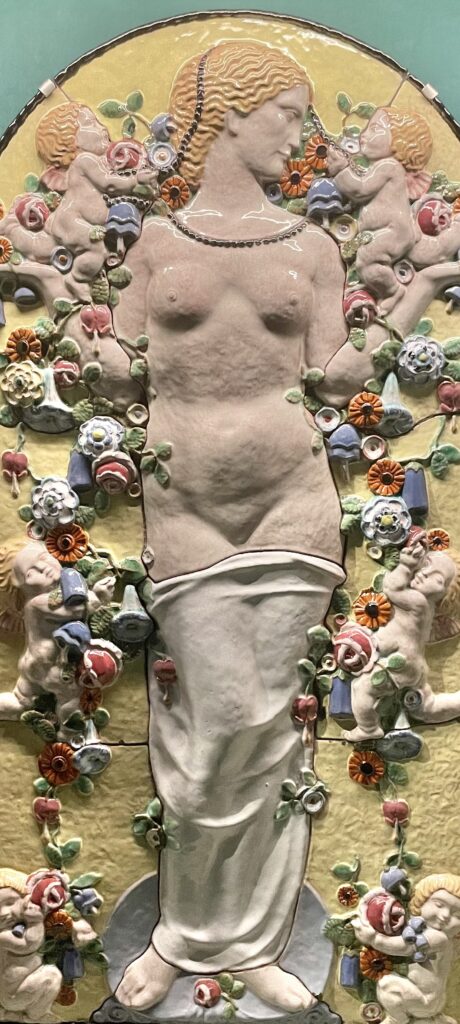
It is presented alongside a radiant piece of ceramic work based on a design of Michael Powolny around 1913 and manufactured by the Vereinte Wiener und Gmundner Keramik.
Thematic worlds – metamorphosis
And finally: Reinterpretation and adaptability are creative principles that characterize the collections of the MAK as well as of Van Cleef & Arpels.
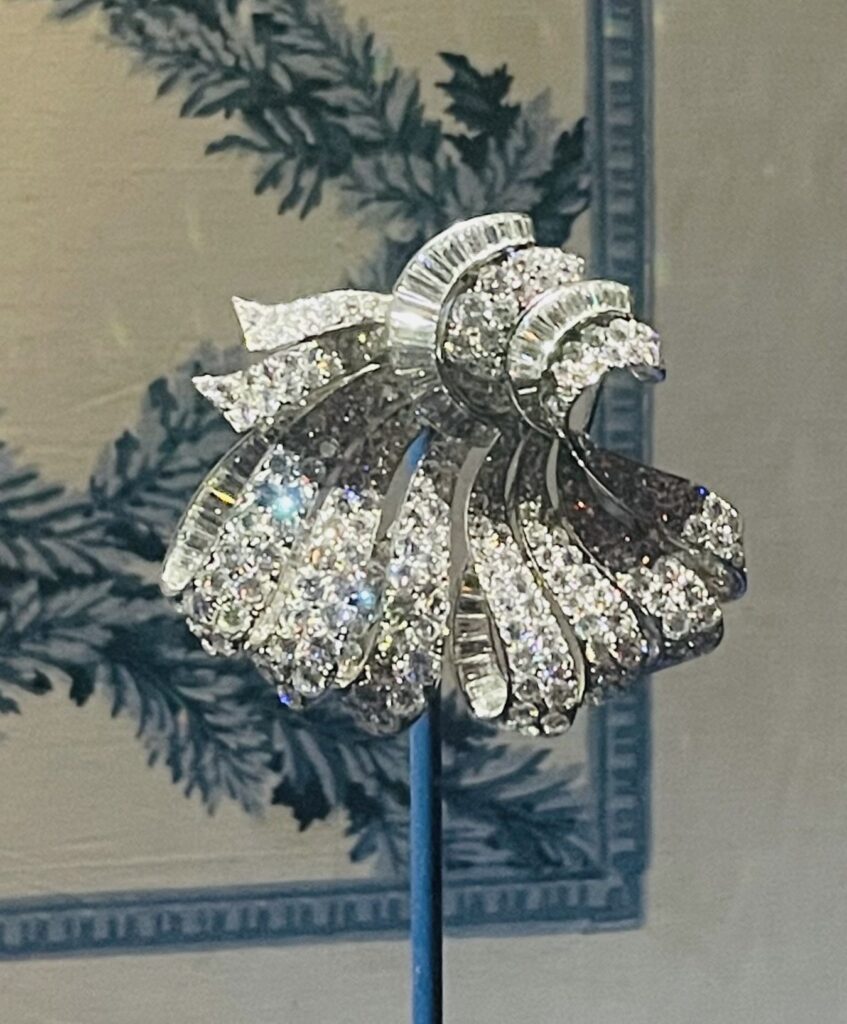
A technical masterpiece of haute joaillerie that with refined precision can be transformed from a necklace into a bracelet. Or just as impressive and surprising: a timelessly elegant double clip from 1937, made of platinum, osmior and diamonds, which is convertible into two parts.
The clip is exhibited as a counterpart to a tablecloth from Goodyer’s Artistic Fabrics from the late 19th century. It features a diamond pattern of blue floral vines, ribbons and bows against a light background, made of cotton printed.
However, metamorphosis is evident not only in function, but also in the design language – for instance, when aesthetics from the past are translated into a modern context.
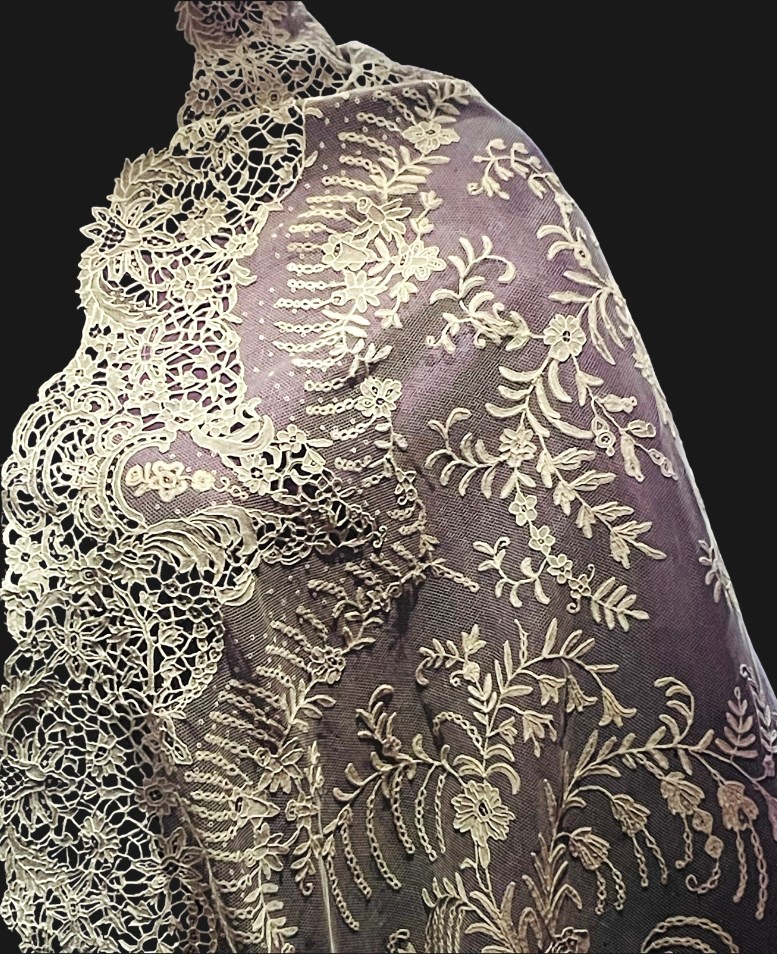
Inspired by the world of couture, a ring crafted from yellow gold and diamonds in ‘ajouré’ (open work) technique mimics the flowing lines of a lace dress – our final highlight.


