

Painting and Expression

A few months ago, at an exhibition in Vienna, I became acquainted with the work of the Chinese-Canadian artist Matthew Wong. His drawings and paintings move the viewer through their emotional immediacy, his sense of color and ductus are remarkable. Since then I have been engaging with his œuvre.

A brief biographical overview

Born in Toronto on March 8, 1984, Matthew Wong was seven years old when he moved with his parents to Hongkong. In 1999, the family turned back to Canada.

He earned a B.A. in cultural anthropolgy from the University of Michigan in 2007 and then in 2012 a M.A. in photography from the City University of Hong Kong.

Wong started exploring painting in 2012. Via social media he maintained contact with people from the art and cultural scene. His first solo exhibition was held at the Cuiheng Art Museum in Zhongshan.

In 2016, he set off with his mother on a journey to the USA and Canada. It ended in Edmonton where he settled down.

Matthew Wong died by suicide on October 2, 2019, at the age of 35.

The artist’s œuvre

Walking through an exhibition of Wong’s works, you enjoy a feeling of experiencing several different art epochs at the same time, thus rich and multifaceted they are. Self-taught, Wong had engaged deeply with both Eastern and Western art history as well as with contemporaries. Expressionism like modernism, the artists Shi Tao, Gustav Klimt, Henri Matisse, Pablo Picasso, Paul Klee or Peter Doig – all these became points of reference for the young man’s indiviual development.  

Matthew Wong only began painting at the age of 27. All the more intense you might name the eight years of his productivity during which he created an œuvre of around 1.300 works.

Matthew Wong and Vincent van Gogh

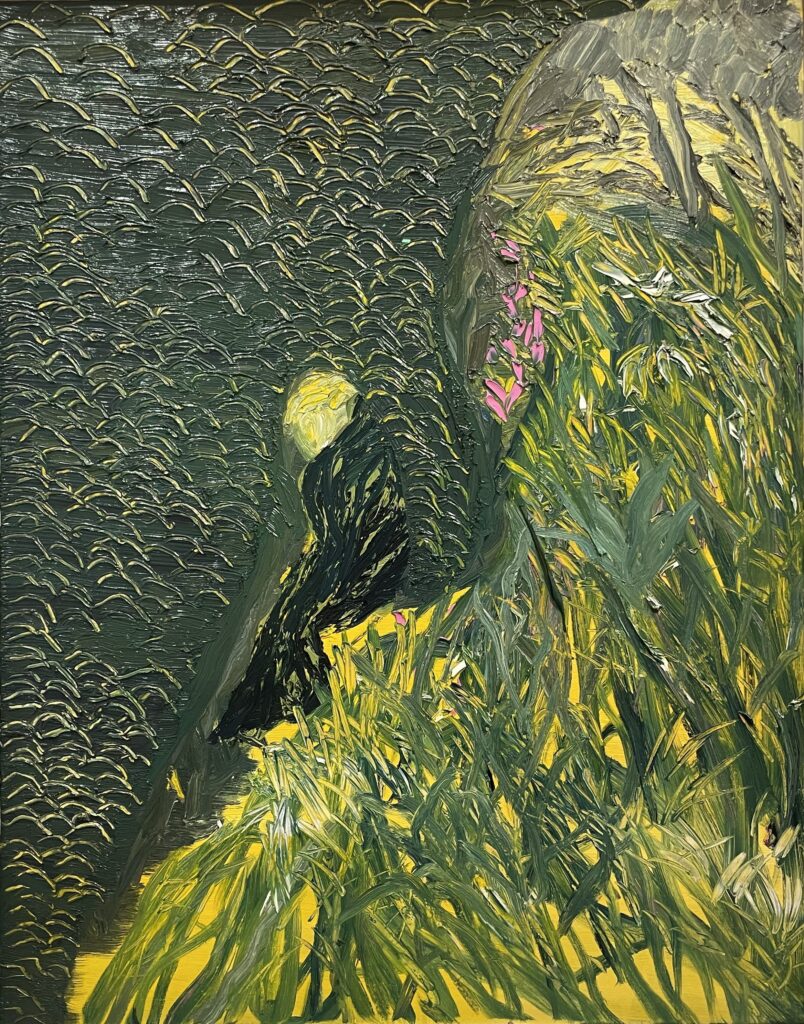
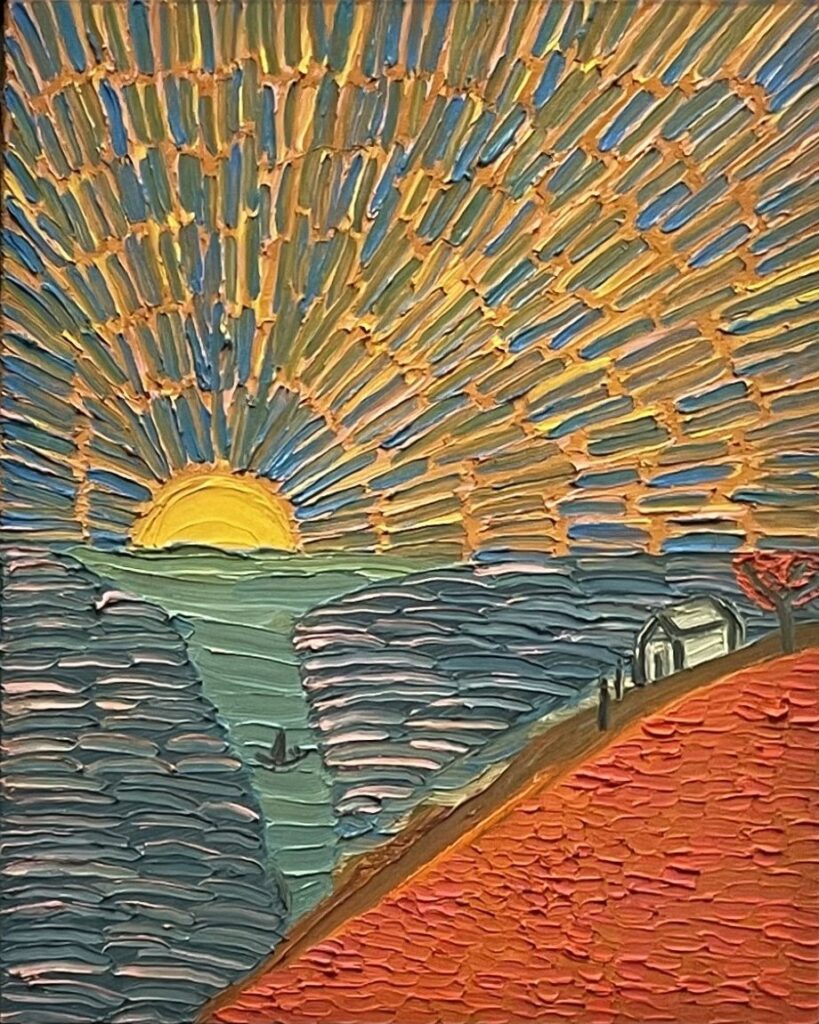
Of great relevance and inspiration to the artistic development of Wong was definitely Vincent van Gogh. In the young Chinese-Canadian’s confrontation with the great Dutch artist, his influence shines through in the themes, the motifs and the colors the young man chose, even in the brushstrokes which became characteristic of his work.

Yet the parallels between the two artists went beyond the stylistic items into their life as both suffered from severe depressions, Wong even from autism and the Tourette syndrom. Painting became a refuge – a small safe place – for both of them. Through it, they experienced a certain joy of living and solace. ‘Life is hell, except for the moments in front of the screen’, Wong once remarked, recognized himself in van Gogh ‘in the impossibility of being part of this world’.  

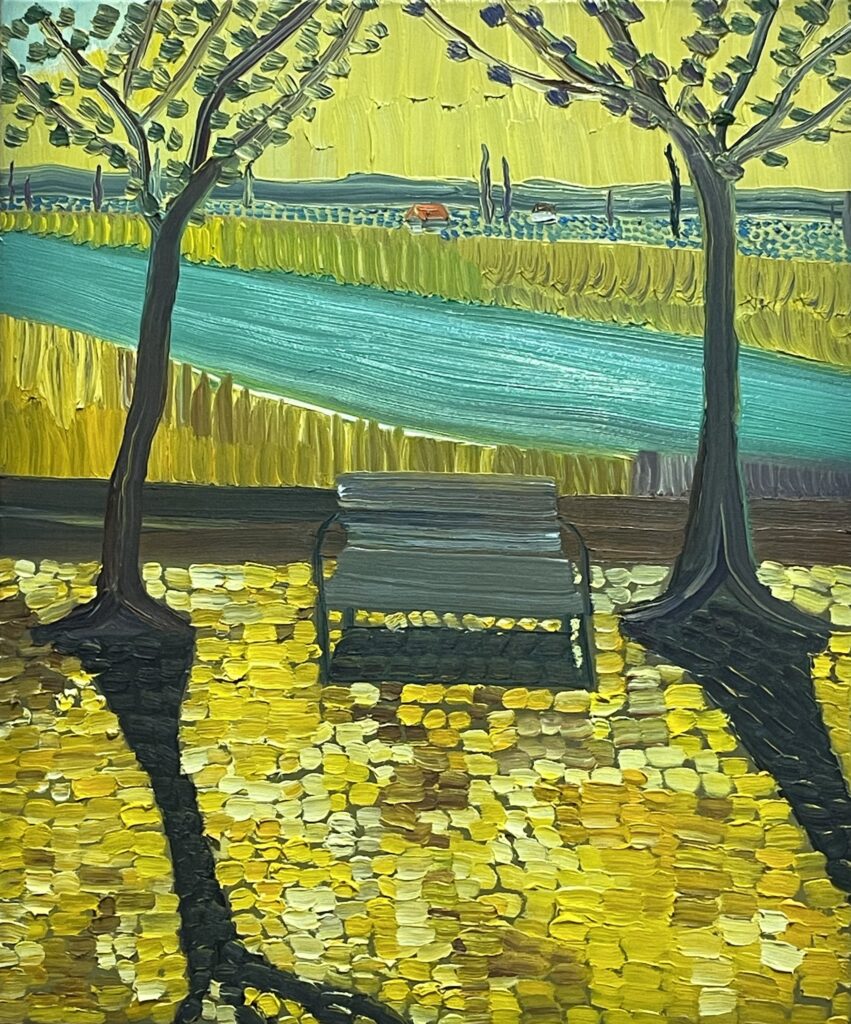
A relationship that spans the ages. As a true indication for this: Matthew Wong’s The Space Between Trees – his personal homage to van Gogh’s The Painter on the Road to Tarascon

Wong’s artistic signature: Black-and-white ..

Witness to his engagement with and the influence of Chinese artistic culture on his œuvre bear Wong’s numerous ink paintings. By means of his Bourdon tube, he subsequently moved closer to the expressive-intuitive approach of traditional ink painting.

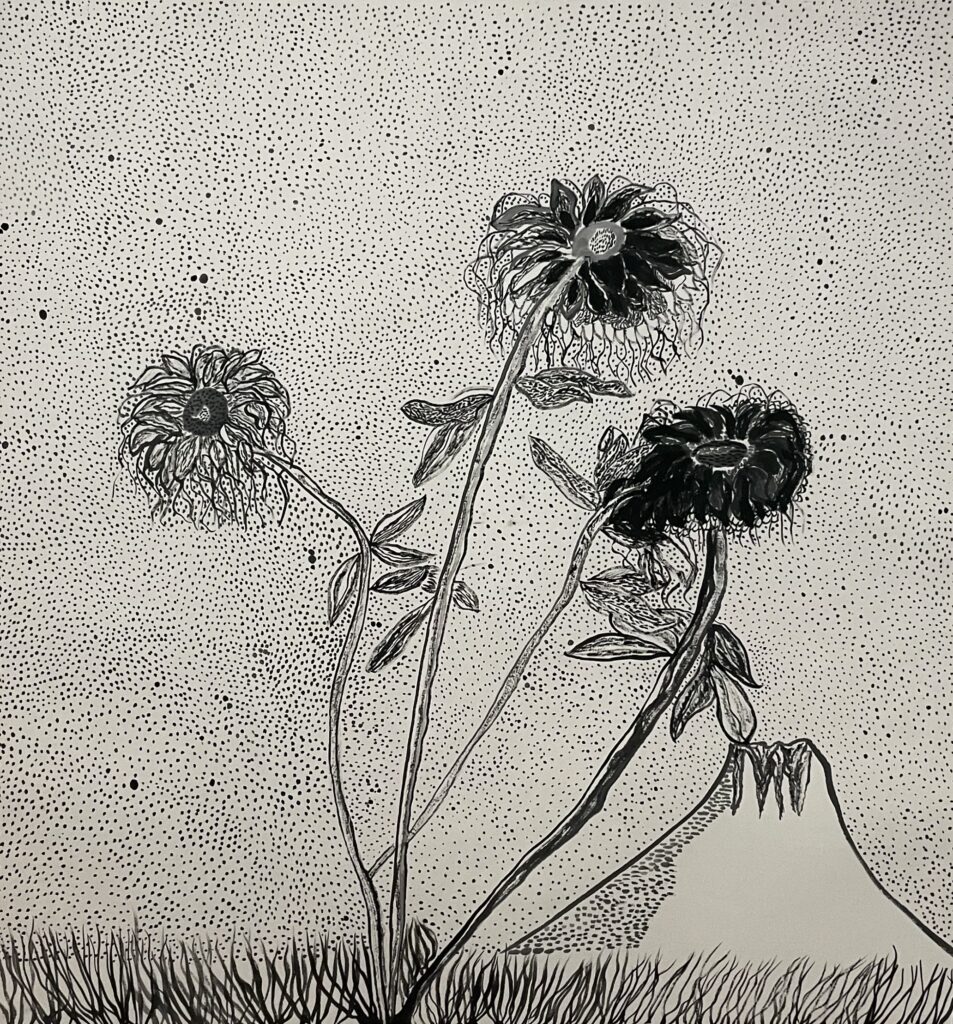
His deep connection to Chinese painting techniques hightlights, among others, his black-and-white work  Flowers in a Starlit Landscape, drawn on rice paper or so-called ‘xuan paper’. By means of his Bourdon tube, he subsequently moved closer to the expressive-intuitive approach of traditional ink painting.

.. and the explosion of color

Albeit with some monochrome pieces, above all, Wong’s œuvre stands out because of the richness of his explosive-like paintings of impressing splendor and of a manifold variety of colors. 

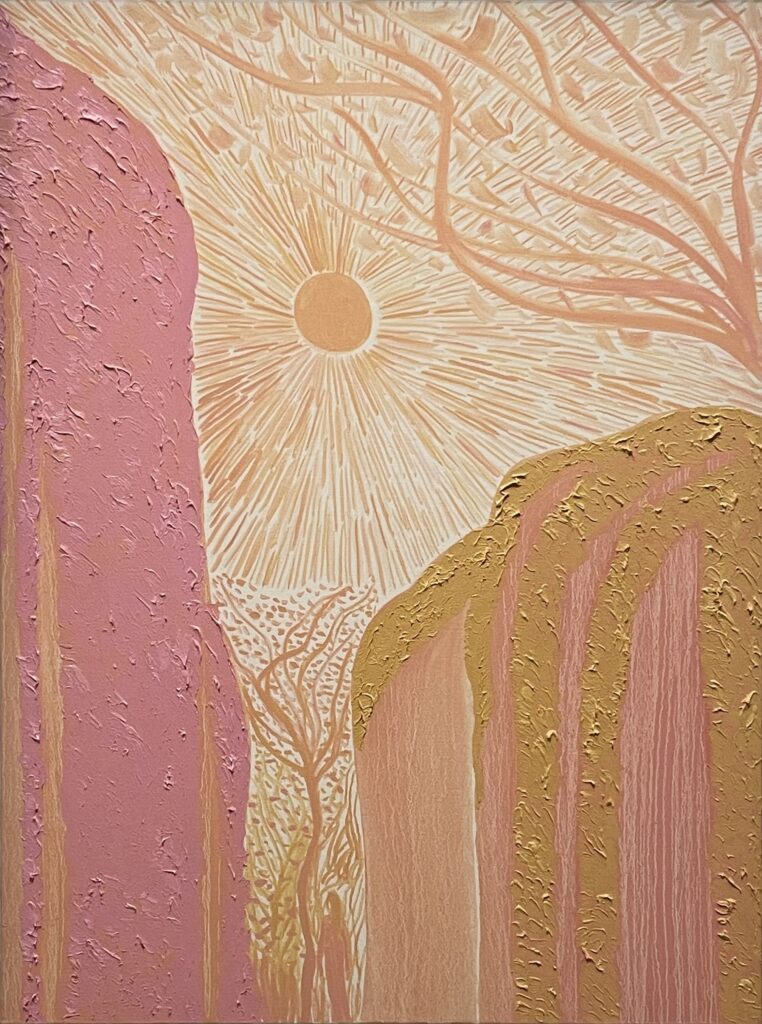
His paintings increasingly captivated through a dynamic, impasto application of paint. And through a brushstroke through which the artist, by means of opposing movements, hatchings, dots and short strokes, created a kind of ornamental quality.

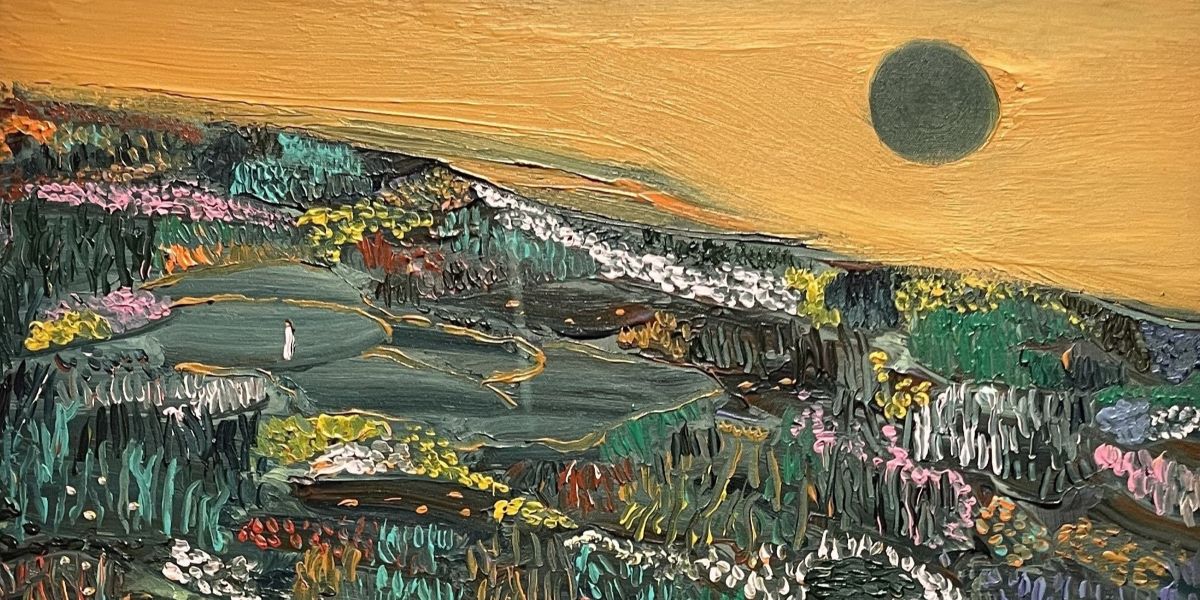
Of all of his great works, l would like to cite Figure in a Landscape (2017), Contemplating Infinity (2015) as well as Paper Moon (2018) as only a small excerpt of them.

The rhythm of time

Contrasts play a central role in the work of both Vincent van Gogh and Matthew Wong. The motifs of sun, moon, and stars, of day and night, of light and dark, of summer and winter, of life and death, appear repeatedly in their paintings. 

His work Good Morning, the young Chinese-Canadian gives an almost monochrome, calm color scheme. Thus the picture exudes a gentle, peaceful atmosphere, also through the artist’s brushwork. 

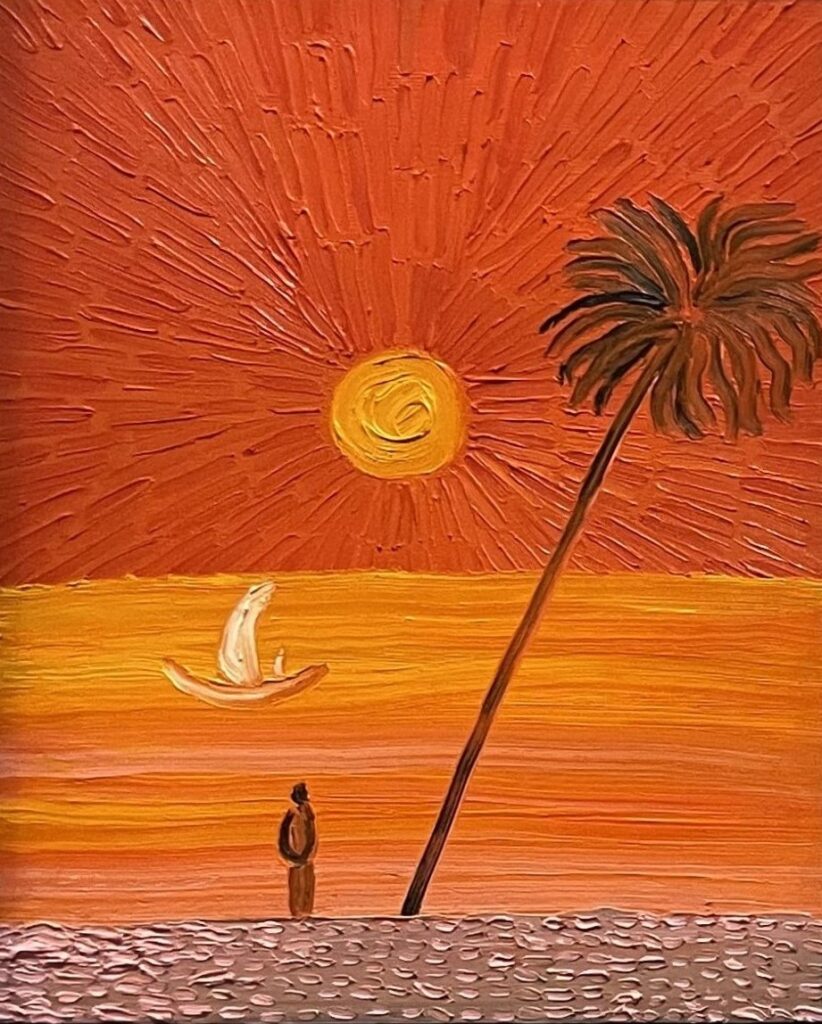
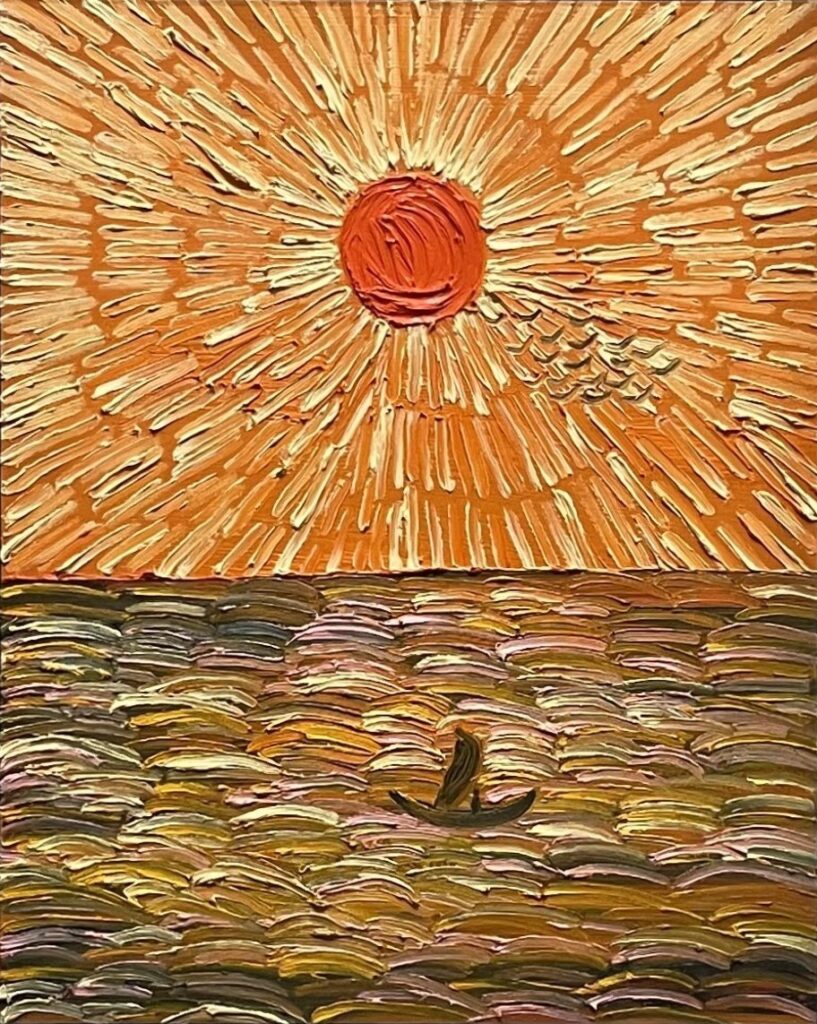
The more vibrant, then, is our experience of Wong’s beautiful trilogy The Journey Home, where he creates deep tension through the use of bold, partly complementary colors and the tactil richness of its painted surface. The triptych itself is exploring a subject that was deeply personal to Matthew Wong’s background and upbringing: journeys – physical as well as spiritual.

The view from within

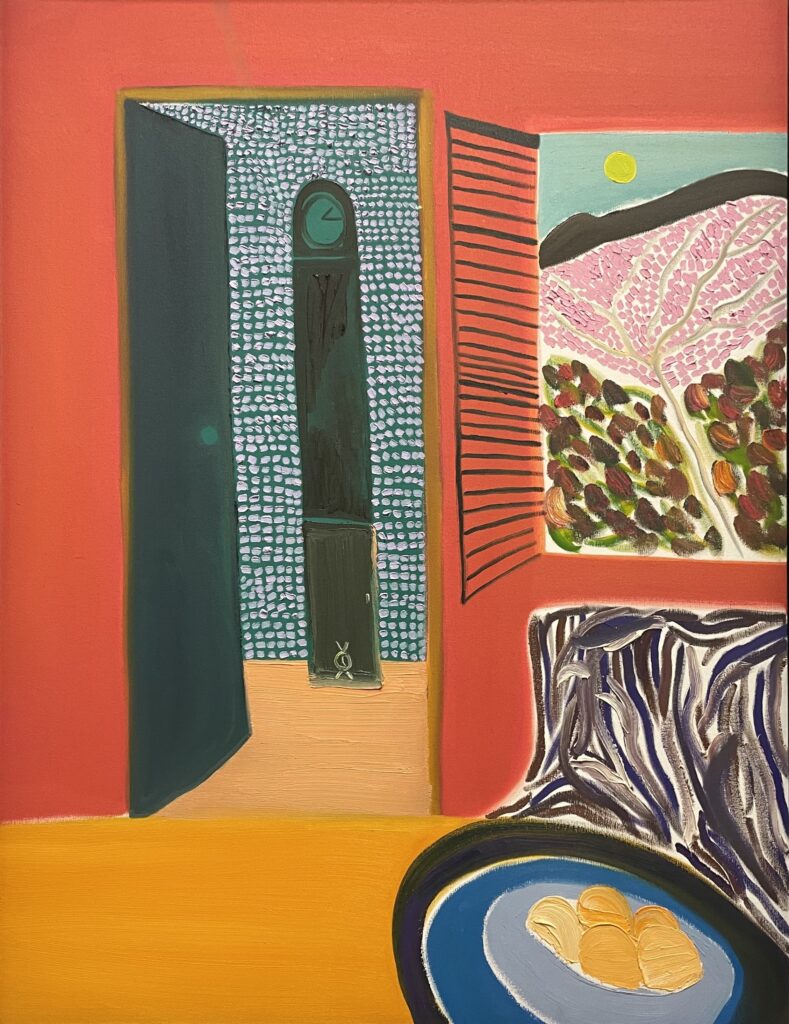
As with the Dutch artist, Wong’s preference for depicting interiors and for interweaving indoor and outdoor spaces reflects his intention to give expression to psychological dispositions. Introspection and self-reflection, the artistic exploration of one’s own emotions are at the center. 

Like in Time after Time, the gaze directed outward from the interior is symbolic of the relationship between the introspective artist’s soul and the outside world. Moreover, the deserted space conveys a sense of absence and of an individual thrown back on himself.

Landscape painting ..

After having lived in major cities like Hong Kong, Los Angeles and New York, Edmonto in Canada became Matthew Wong ‘s retreat – his sanctuary.

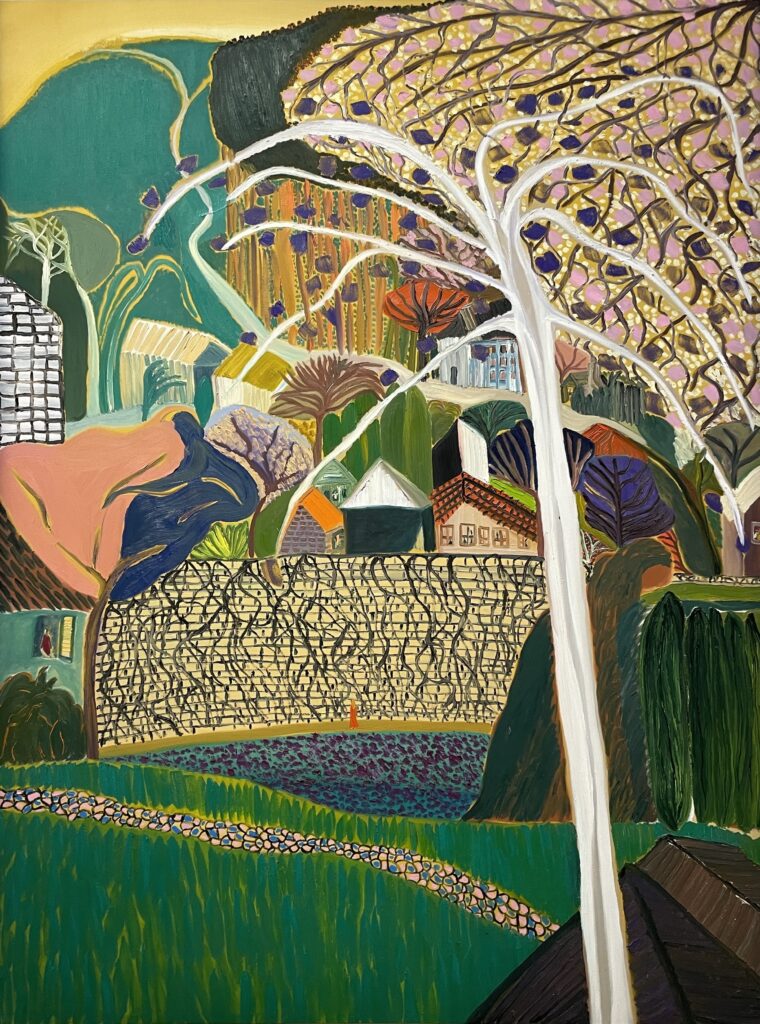
In his longing for belonging to a place, he developed a preference for the depiction of imaginary mood landscapes. Town versus countryside, civilisation and nature define many of his paintings, for example his work Old Town.

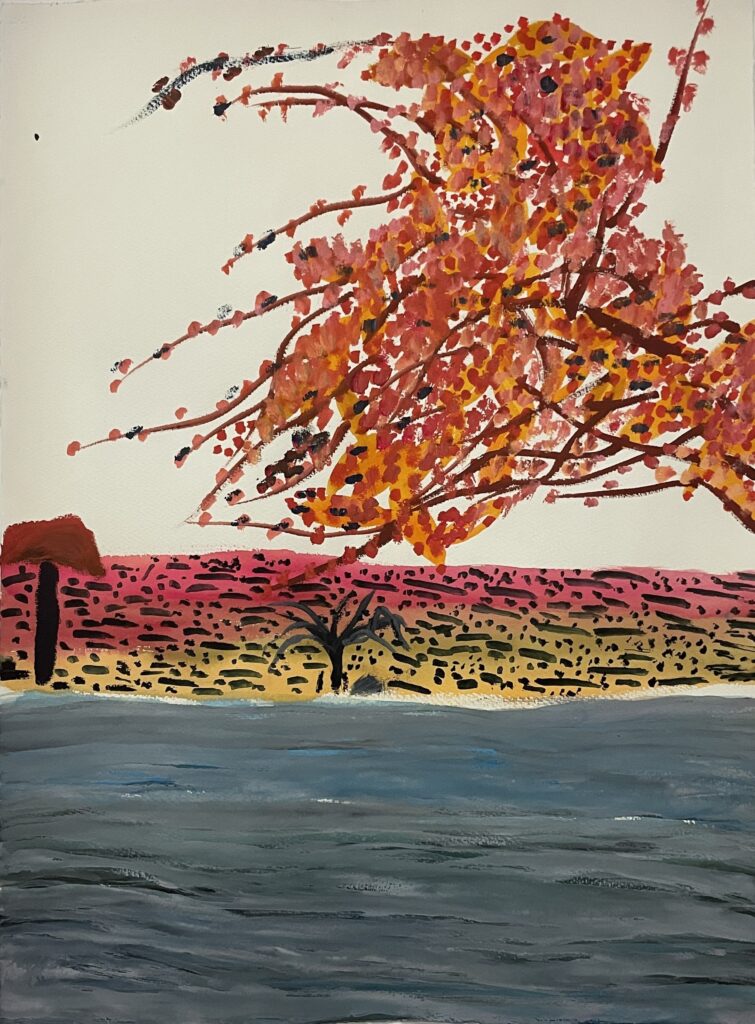
And even in his landscapes, the various artistic styles the young artist engaged with during his life and creative period come into play. Thus, the painting White Sea, White Sky from 2016 bears a different signature than the one just presented before, or ..

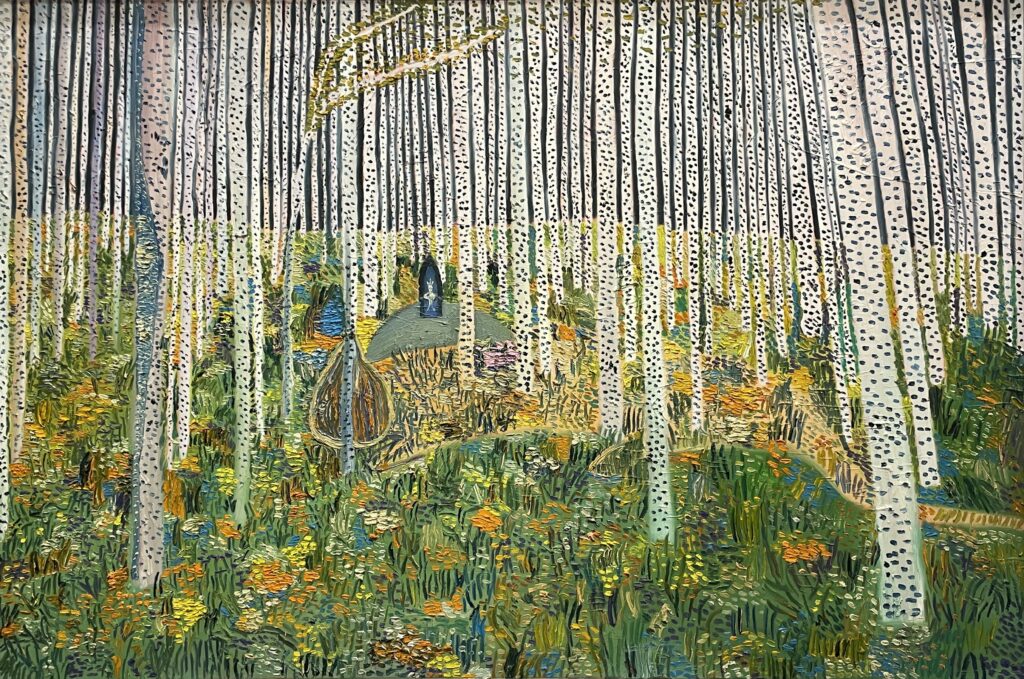
.. Wong’s The Kingdom, portraying a birch forrest, ripped through with splendid splashes of color, adding something like brightness to it. And in a small clearing, on a throne, sits a lone figure – which brings us to another defining element of Wong’s landscape paintings.

.. as emotional contrast ..

Because although the works impress with their vitality and energy, in a small way, they reflect the inner state of their creator and his mental health problems: The landscape is only populated by a small, solitary person.

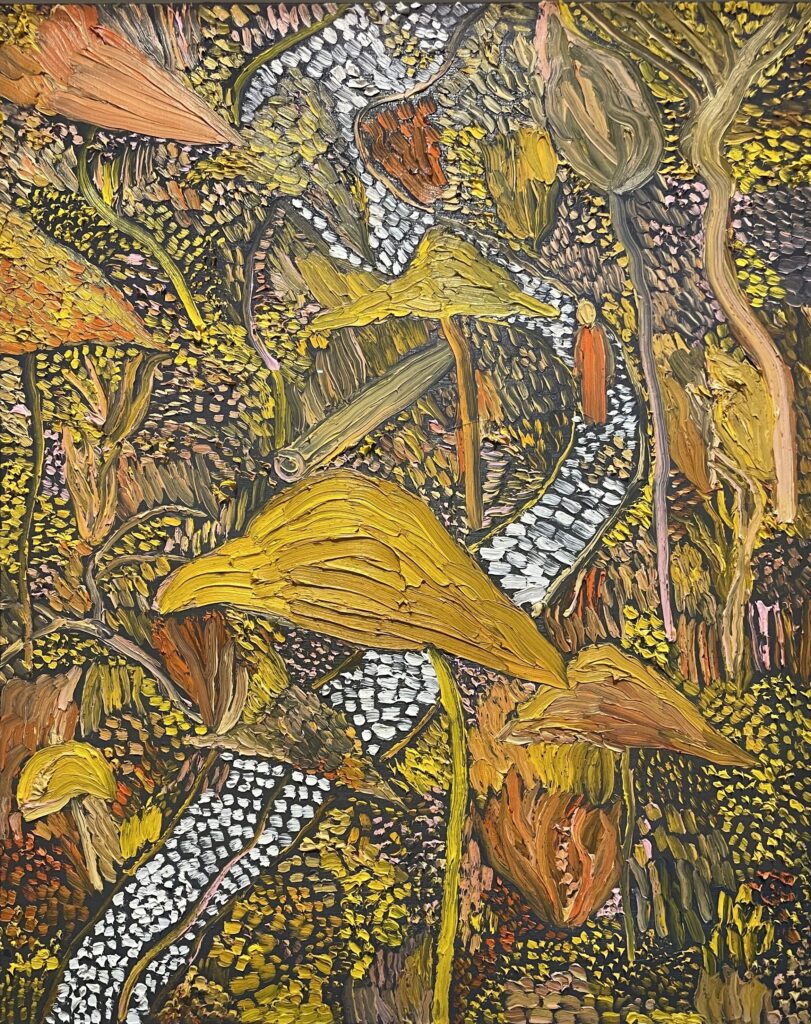
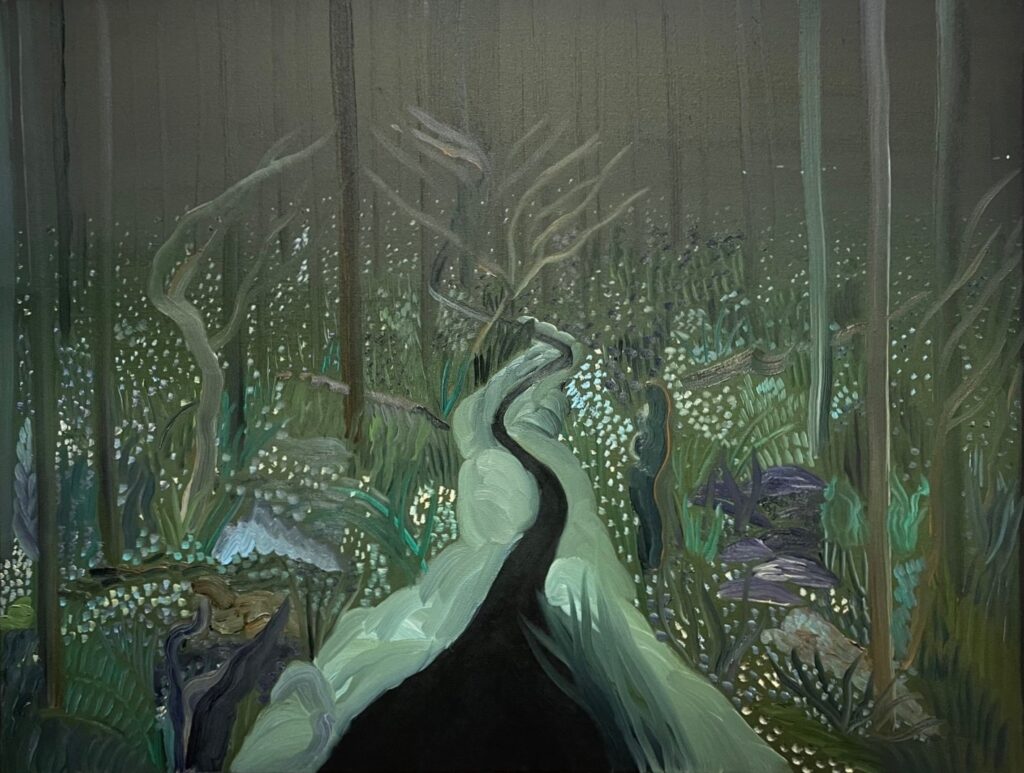
Wong’s paintings feel almost like spot-the-difference puzzles. For example, his impressive, powerful work in oil  A Walk Through Primordial Garden, which was created in 2018.

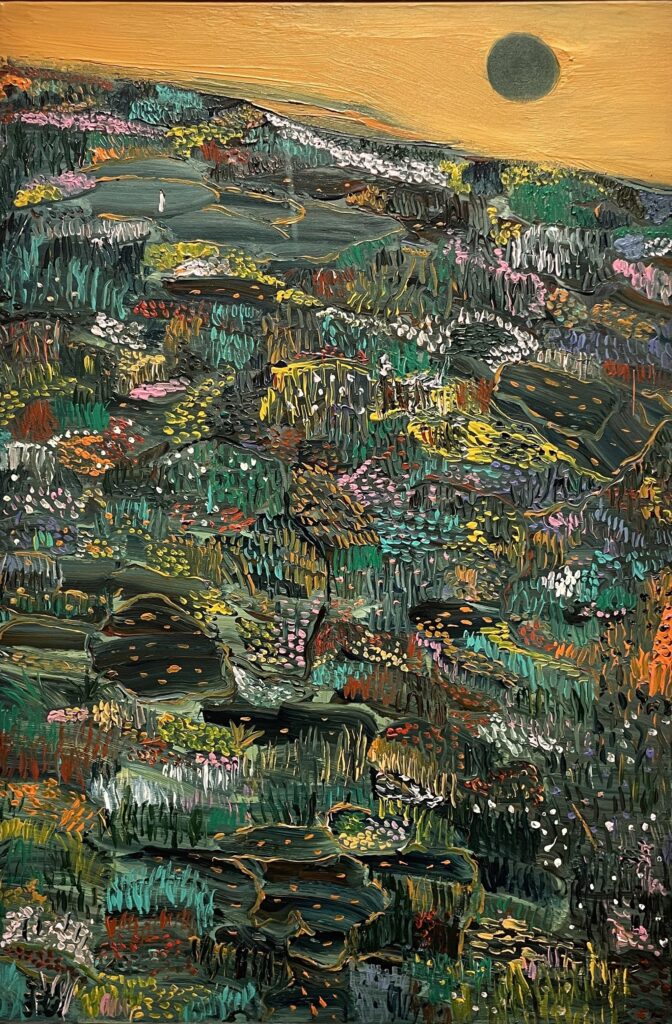
This phenomenon also characterizes his amazing motif The Other Side of the Moon. 

Rendered in such beautiful colors and of such incredible instensity, it reminds one of something like paradise, a distant utopia. As Wong himself described, on the one hand, he drew strength from his active art, on the other hand, such a depiction made him deeply sense the inaccessibility of such a place, which led him to a deep feeling of loss – the paradox that was the core of his vision.

.. and of melancholic atmosphere

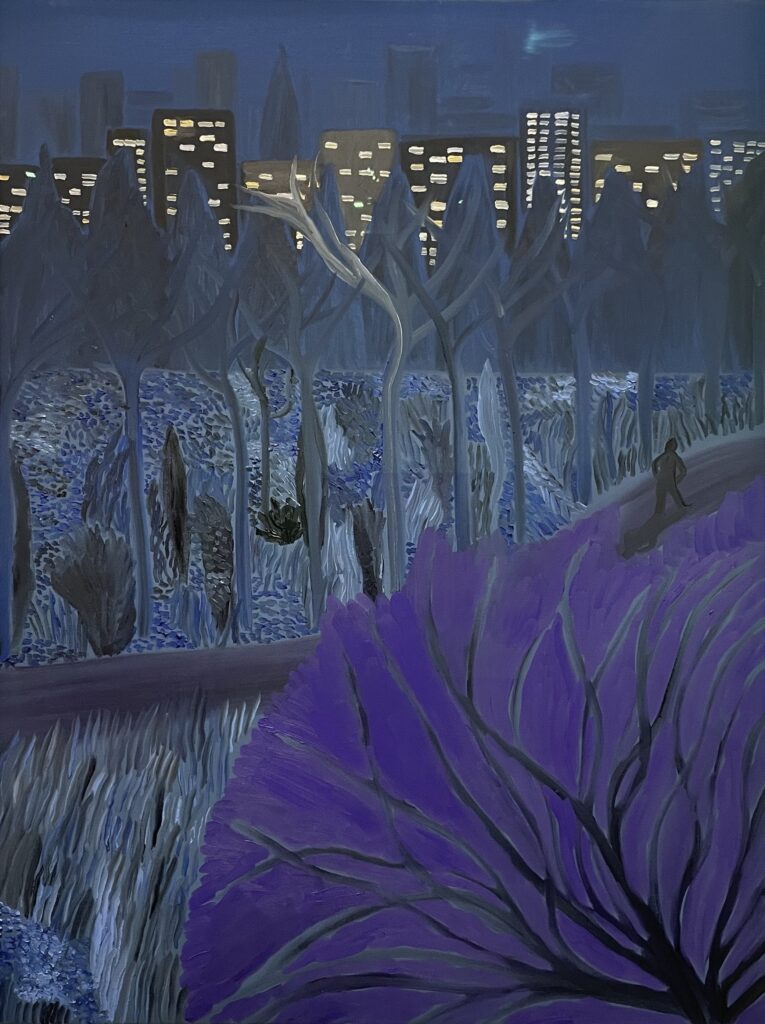
Alongside his luminous  scenarios of vivid color arrangements, by addressing the isolation of the individual amidst natural and urpan landscapes, Wong created works of deep melancholy. 

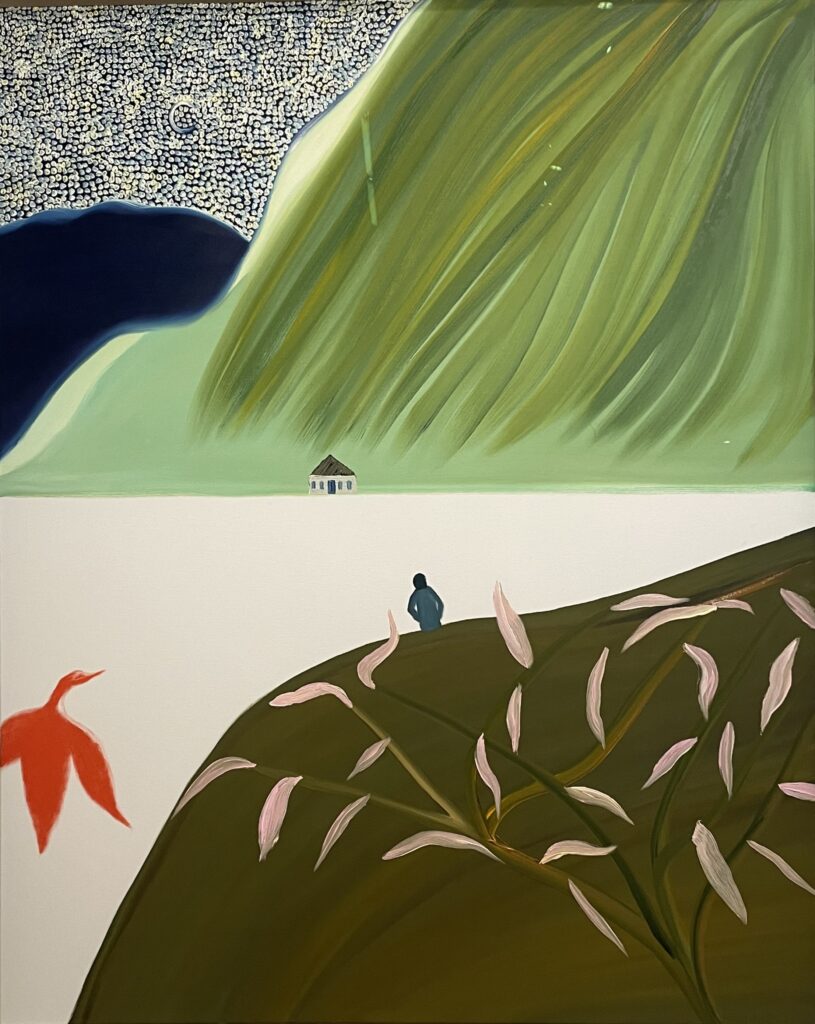
In this context, I was particularly fascinated by his painting See you on the Other Side. Here, you can literally feel the loneliness of the small figure depicted.

By showing the other wordly, Wong’s themes sometimes almost carry a hint of the uncanny. That is what his work Dark Reverie does, which captivates with its claustrophobic yet poetic depth.

In the last year of his creative work, Wong painted predominantly in shades of blue. As implemented in his nocturnal painting Solitude, immediately impressing, he himself described ‘the blueness of blue’ through its fluidity, its affect and its ability to activate nostalgia.

Having had the opportunity to experience and learn all this – what a valuable encounter with a fascinating artist.

Published July 23, 2026

You may also like

Previous Article

Next Article

Previous Article

Next Article